

A brand funnel isn’t just for ads—it’s how people move from “who are you?” to “I trust you” to “I’ll buy again.” If you skip steps, you’ll end up overpaying for leads or discounting to force conversions.
At the top, focus on awareness: clear niche content, strong visuals, and simple value messaging. This is where you earn attention with relevance—not complexity. In the middle, nurture trust: case studies, behind-the-scenes process, client stories, FAQ posts, and comparisons. These reduce uncertainty and position you as the safer choice.
At the bottom, conversion needs clarity: a sharp offer, clear outcomes, timelines, and an easy next step. Remove friction with strong landing pages, fast response time, and proof near the CTA.
Finally, loyalty is where brands win: onboarding, after-sale follow-ups, community, surprise value, and consistent customer experience. Retention is cheaper than acquisition and creates organic referrals.
Build your funnel like a system. Each stage should have a goal, content type, and metric. When the funnel is consistent, brand growth becomes predictable.
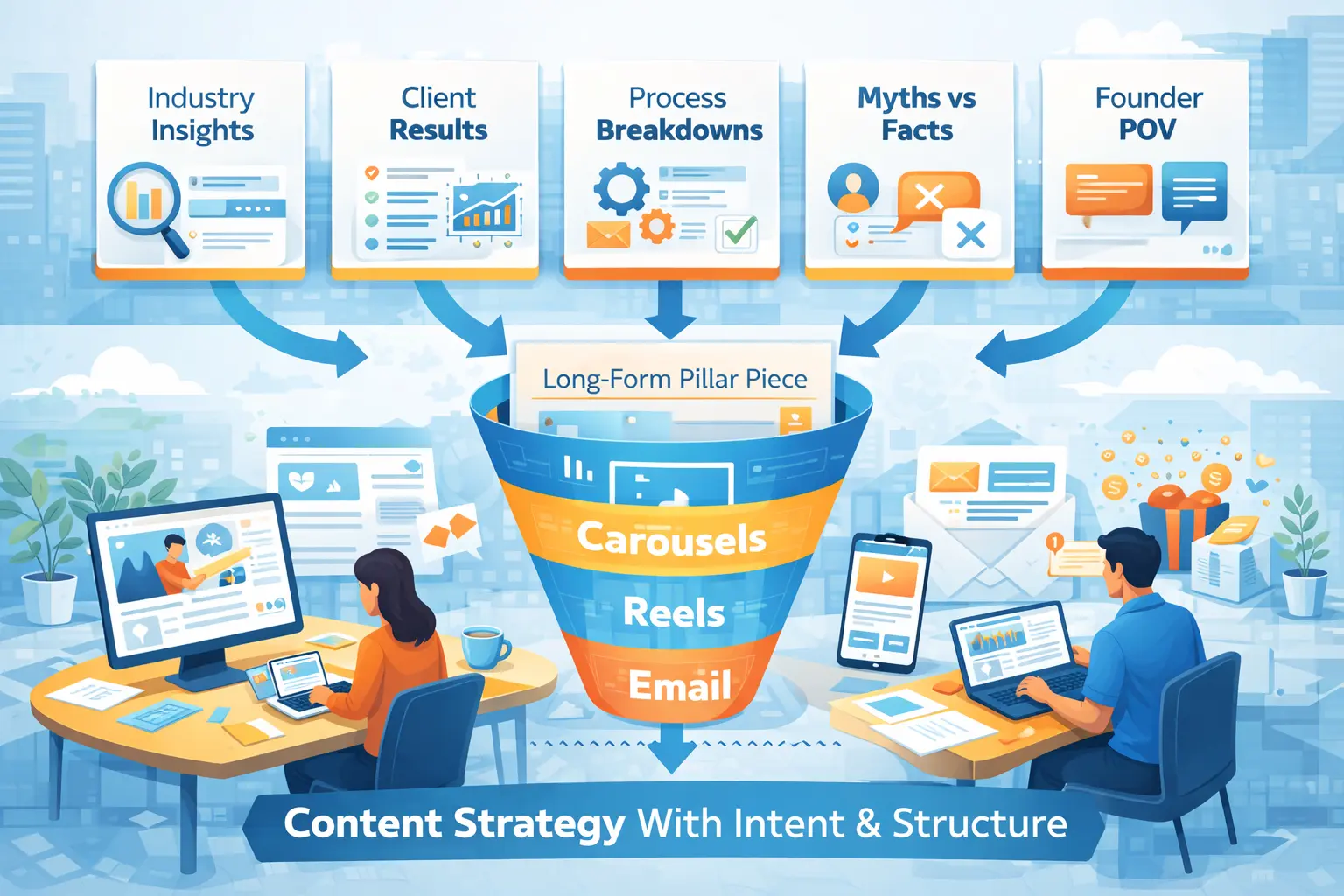
Content works best when it’s a system, not a daily struggle. If you’re constantly asking “what should I post today?”, you’ll burn out and your brand will feel random.
Start with outcomes. Decide what content should achieve: awareness, leads, or trust. Then set 3–5 content buckets aligned with your positioning. Example: “industry insights,” “client results,” “process breakdowns,” “myths vs facts,” “founder POV.” Now you can rotate these buckets endlessly without losing consistency.
Next, create a repeatable production workflow: one long-form pillar piece per week (blog or video), cut into 6–10 short pieces, repurpose into carousels, reels, and email. Batch-create, schedule, and review monthly performance.
Use constraints: limit platforms, limit formats, and stick to what converts. Add a simple KPI: saves, replies, qualified leads, and booked calls. If something isn’t moving these, improve it or remove it.
Sustainable content is not about posting more—it’s about posting with intent and structure.
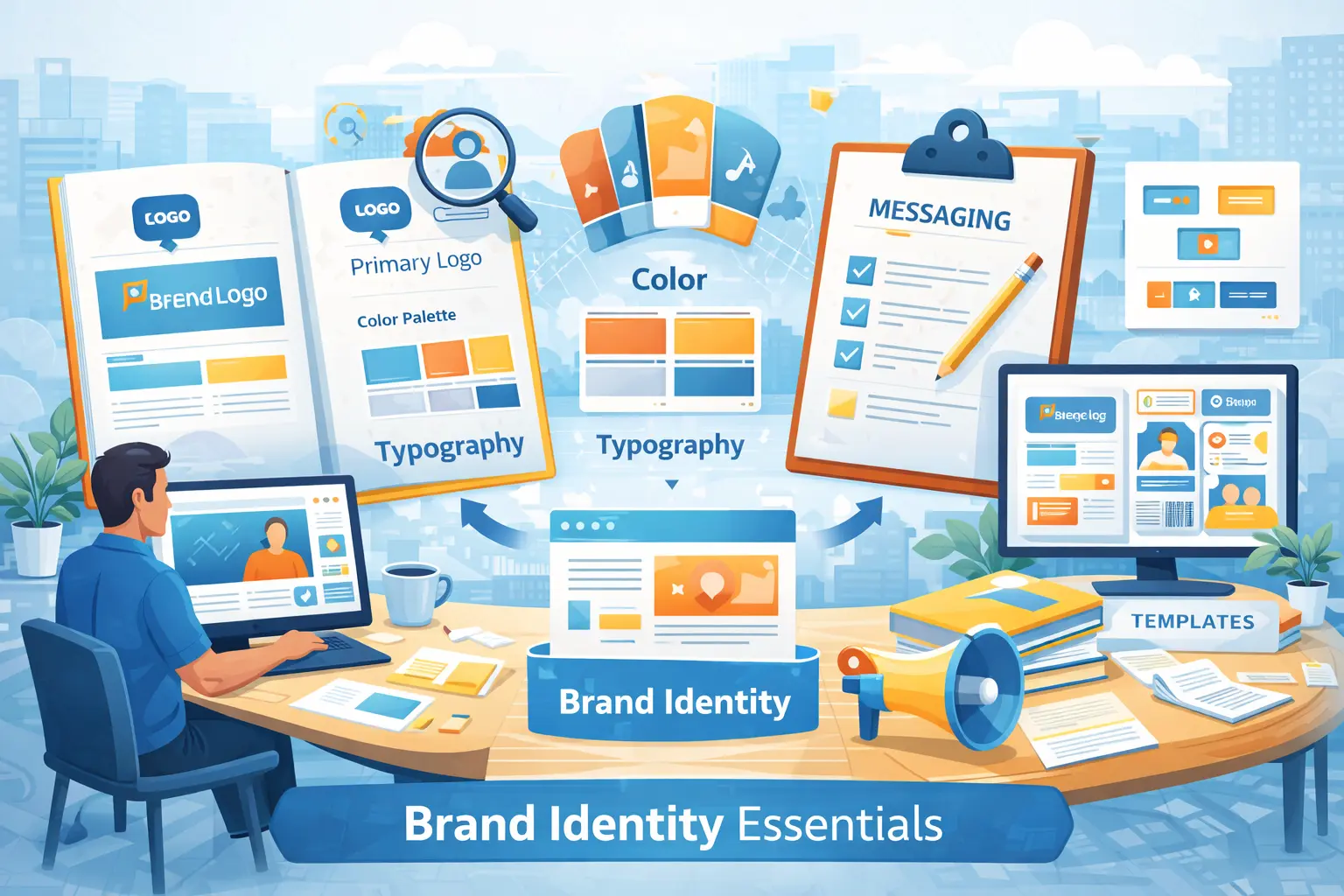
A brand identity is not just a logo. It’s the visual and verbal system that makes you recognizable. Many brands waste time on fancy assets without building the essentials that drive clarity and trust.
Start with the basics: logo set (primary, secondary, icon), color palette, typography, and spacing rules. Add practical templates: Instagram posts, story frames, ad formats, pitch deck slides, and website sections. These reduce design effort and keep everything consistent.
Next, define your tone and messaging rules. If your visuals say premium but your copy sounds casual, your brand feels confusing. Align both. Create a short brand style guide: what you stand for, who you serve, your promise, and your key messages.
Lastly, prioritize usability. Your identity must work on mobile, in dark mode, on print, and across different platforms. A scalable brand identity is simple, flexible, and consistent.
If you’re early-stage, build a tight foundation first. You can evolve aesthetics later. Consistency is the real upgrade.