

Strategy is what makes growth repeatable. A scalable brand isn’t built by “more content” or “more ads” alone—it’s built by clarity: who you serve, what you stand for, and what you’re consistently known for. When strategy is right, marketing stops being a random set of activities and becomes a system.
Start with positioning. Define the category you want to win, the audience segment you want to own, and the clear benefit you deliver. Then translate that into a brand promise and 3–5 messaging pillars that guide every website section, ad, reel, and sales call. Your content should feel like different angles of the same truth.
Next, build a scalable acquisition engine: one primary channel, one conversion path, one offer ladder. You can add channels later, but scale comes from focus first. Track metrics that matter—qualified leads, CAC, conversion rate, retention—not vanity metrics.
Finally, scale operations. Codify your tone, templates, ad structures, and creative rules into a brand playbook. This reduces dependency on individual people and improves consistency across teams. Strategy isn’t a document—it’s the decision-making framework that keeps your brand aligned as you grow.
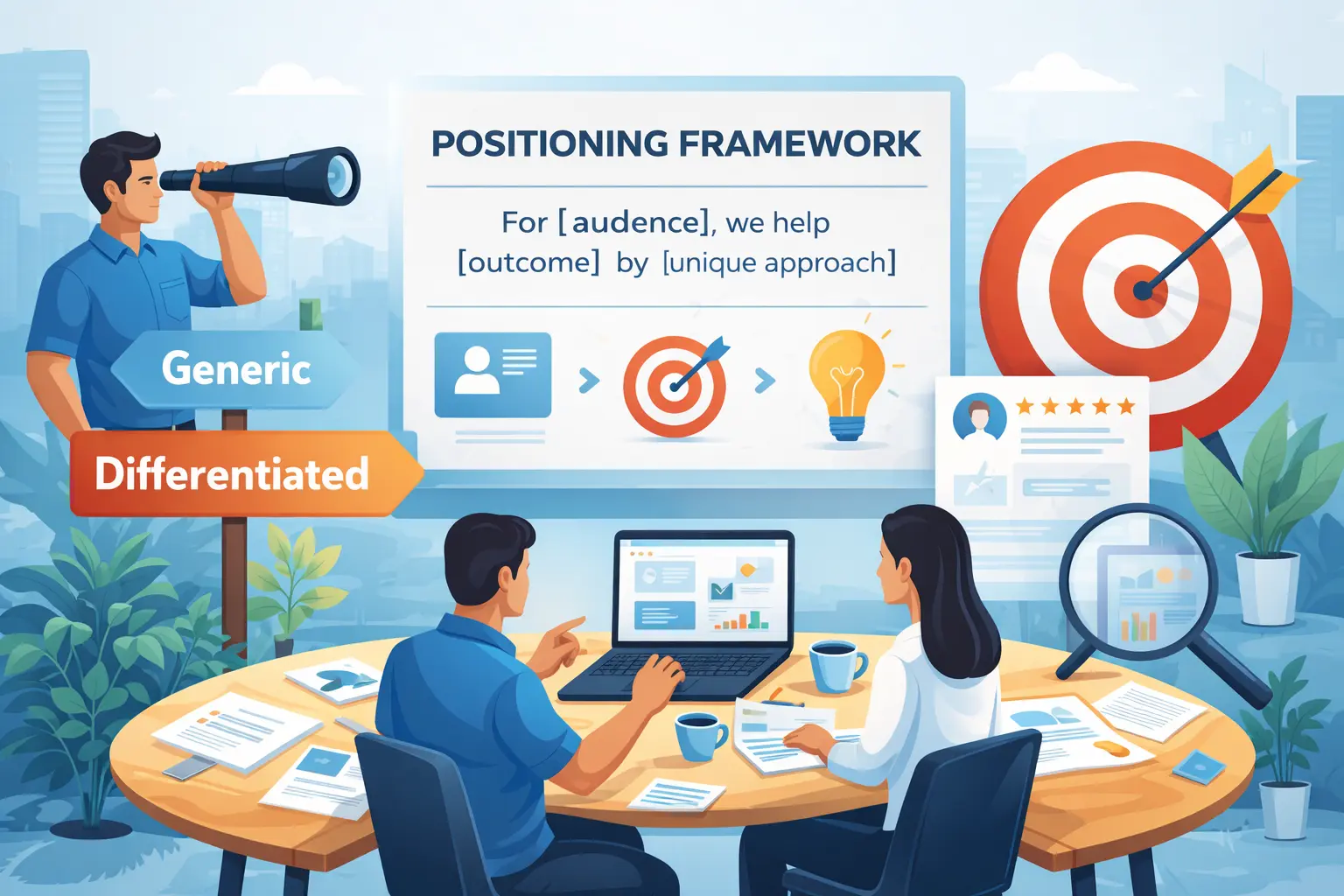
Most brands fail to convert because they sound like everyone else. If your messaging is generic, your audience has no reason to choose you. Positioning is the difference between “we do marketing” and “we grow D2C brands with performance creative and conversion systems.”
Start with a tight audience definition. “Everyone” is not an audience. Choose a segment with shared pain points, buying triggers, and budget reality. Then clarify your unique mechanism—how you deliver results differently. It could be your process, your tech stack, your creative style, or a specialization.
Once you have that, turn it into a simple positioning statement: For [audience], we help [outcome] by [unique approach]. This becomes the backbone for your homepage, ads, and sales pitch.
Great positioning also removes friction: it sets expectations, pre-qualifies leads, and makes pricing feel justified. Add proof—case studies, before/after metrics, testimonials—and your positioning becomes believable, not just clever.
If you want higher conversions, stop trying to impress. Start trying to be clearly understood by the right people. Clarity scales.
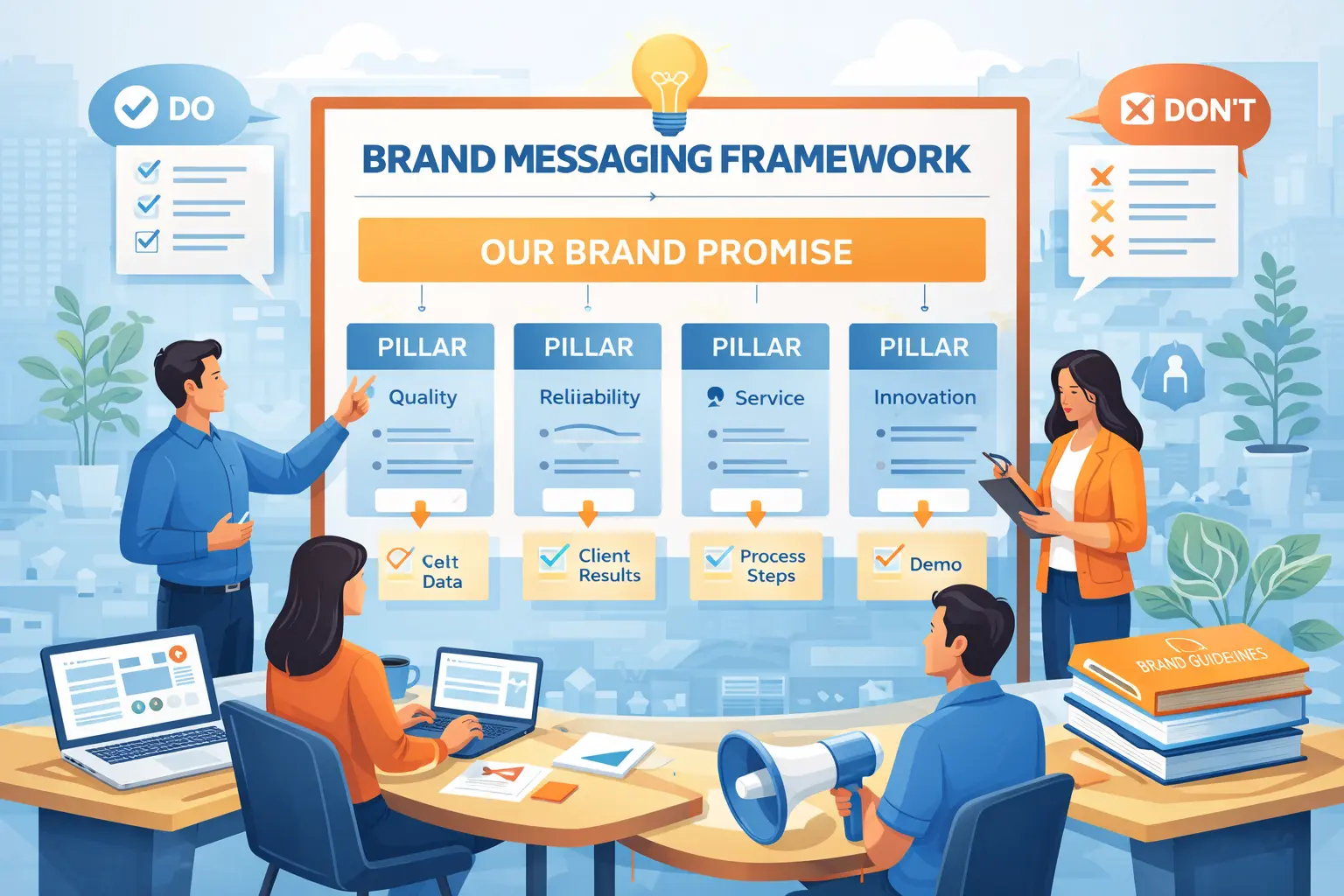
Inconsistent messaging kills trust. One day you’re premium, the next day you’re discount. One reel sounds bold, the next sounds corporate. A messaging framework keeps everything aligned so your brand feels stable and recognizable.
Build it in layers. First, define your brand promise in one sentence—what customers can consistently expect. Second, create 3–5 messaging pillars. These are themes you’ll repeat across content, ads, and web pages (for example: speed, quality, reliability, innovation). Third, define proof points for each pillar—specific evidence like stats, client results, process steps, or demos.
Add voice rules: do you sound direct, playful, technical, minimal, or emotional? Write 10 “dos” and “don’ts” so every writer and designer can match the tone. Then create a swipe file of hooks, CTA styles, and common objections with your best responses.
When this framework is in place, content becomes faster to produce and easier to scale across platforms. Your audience also learns what you stand for, which builds trust and improves conversions.
Consistency isn’t boring. It’s compounding.